The People, the Passion, the Purpose: Matthew Guagliardo’s Story as a Veterinary Social Worker
- Kat Griffith

- Sep 29
- 5 min read
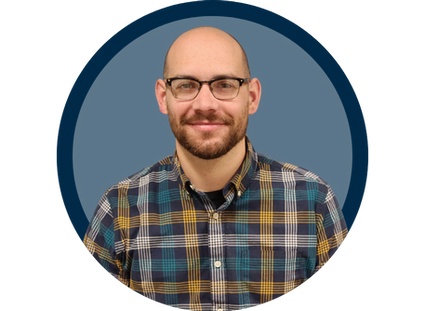
I was given the opportunity to introduce Matthew “Matt” Guagliardo, a school-based therapist in upstate New York who also serves as Treasurer for both blendVET and the International Association of Veterinary Social Work (IAVSW). Alongside his direct-practice work with middle school students, Matt is involved in community education at his local SPCA and is developing new initiatives that connect social work with veterinary medicine.
Matt’s spotlight highlights his journey from working in higher education to animal welfare and now social work, as well as his dedication to advancing the field of veterinary social work (VSW). His personal story, professional expertise, and commitment to the human-animal bond highlight the unique ways social workers can impact both people and animals. A true Renaissance individual who is balancing many roles in his field.
Q: Can you share a little about your professional journey and how you became involved in veterinary social work (VSW)/the human–animal bond?
Matt shared that his background included higher education and animal welfare before he returned to school to earn his Master of Social Work. During his graduate studies, he discovered veterinary social work, which immediately aligned with his original motivation for entering the profession. Matt stated “I just finished my Master of Social Work back in December 2024… and a semester or two in I learned about veterinary social work and it clicked - this was the whole reason why I wanted to go into social work.”
He now balances his role as a middle school-based therapist with leadership positions at blendVET and IAVSW, while also working with his local SPCA to bring veterinary social work into the community. One project he mentioned leading was an animal foster care system that could help survivors of domestic violence escape, giving them someone to watch their pets while they try to get back on their feet.
Q: What does the human–animal bond mean to you personally and
professionally?
For Matt, the human-animal bond is deeply personal. After becoming a wheelchair user, his dog provided comfort during a difficult transition, showing him the unique, nonjudgmental acceptance our furry friends can offer. “I had a Boston Terrier Chihuahua mix and he came beside me and kind of sat down and just like, you know, offering that quiet support and like I’ll never forget that.”
Professionally, he sees this same dynamic when therapy animals help children open up in ways they might not with adults, describing the bond as a vital tool for healing and connection. He mentioned how the animals can bring a calming aura to the children at schools when introduced.
Q: What are some of the biggest challenges you’ve faced in your role, and how do you navigate them?
Documentation and keeping up with the workload are challenges in Matt’s school-based therapy role. He structures his day, uses pockets of time to finish notes, and stays intentional about communication with school staff and families. “I try to get in an hour before the first bell rings… and after students leave I usually stick around… just to finish up whatever I missed.”
Matt is also realistic about the risk of burnout. Taking on multiple roles can be taxing, so he emphasizes knowing your limits. If you want to truly help people, you have to carry only what allows you to give your best. For him, that means setting boundaries. No weekend sessions, and making time for the things that refill his energy. He spends Sundays with his fiancée, who paints, while he works on personal projects, like building a device to open and close the curtains.

Q: What has been one of your most rewarding experiences working in this field?
Matt finds the greatest reward in watching clients, especially middle school students, realize their own agency. Helping young people who experienced trauma gain language for their emotions and begin to feel empowered is, in his words, “the good stuff.” He also spoke about the joy of seeing lives illuminated, echoing John Dewey’s philosophy that education is “the continuous illumination of life.” He actually recommended a book: The Pedagogy of the Oppressed by Paulo Freire. Matt shared that this book could be very beneficial for social workers, as a lot of what Freire writes aligns with social work values.
Q: For students, interns, or early-career professionals interested in this path, what advice would you give?
“Impostor syndrome is normal,” Matt said. He shares that it’s okay to feel like you don’t know everything because you aren’t supposed to. That is why social workers have continuing education and supervision. It is our responsibility as social workers to continuously learn about the world changing around us as well as advancements in evidence-based practices in our field.
Social work is a profession built on lifelong learning, supervision, and community support. He encouraged new professionals to trust that they know more than they think and to embrace growth along the way. We also talked about the importance of finding a job that you love. Our work is often a majority of our waking hours, so it is important that the work you do and the workplace you exist in is something you look forward to. Matthew shared that his transition to his current role at the middle school has been uplifting, as he has found a workplace where he feels supported and rewarded in the work he does.
Q: How did you first get involved with blendVET and IAVSW?
Matt explained that he was “roped into it by Bri.” Bri Golob (who also helped me get my internship!) saw his LinkedIn profile, noticed his experience with finance, and encouraged him to run for treasurer. Though he initially thought it sounded intimidating, he found that the treasurer role was manageable and allowed him to contribute to both organizations in a meaningful way.
Q: How do you make sure resources for the non profits are used in ways that support the mission?
Matt said this comes down to teamwork with the board and executive members. For the IAVSW, they start with the mission and vision outlined in their bylaws, then decide how resources should be allocated. That often means investing in outreach, covering travel costs for conferences, hosting the website, and building a membership platform. For blendVET, the focus is on education, so funding goes toward travel to schools and materials for pathway programs. He emphasized the importance of making sure spending is “appropriate, sustainable, and ethical” to both support the mission and prevent potential misuse.
Matt’s story reminds us of the many diverse roles social workers hold, especially within the emerging field of veterinary social work. His journey highlights not only the resilience and compassion required in this profession, but also the profound impact of the human-animal bond in promoting healing and connection. By balancing his work with students, leadership within not just one, but two organizations, and community-based programs, Matt demonstrates how social workers can create meaningful change across multiple settings. We appreciate him taking the time to share his insights, and his ongoing contributions to the growth and future of veterinary social work.



Reading this blog is very inspiring to me as a new veterinary social worker just making my way into the Vet Med space. Matt's work with middle school aged kids is highly commendable- giving them that time and space to learn about their emotions and all the "good stuff" is so vital for our future generations. I hope to have such a positive Impact In my work in promoting the human animal bond.